Learnership application letter: template + example (South Africa)
Write a learnership application letter that’s short, specific, and easy to screen. Use the copy-and-paste template and a complete example tailored to SETAs and host employers.
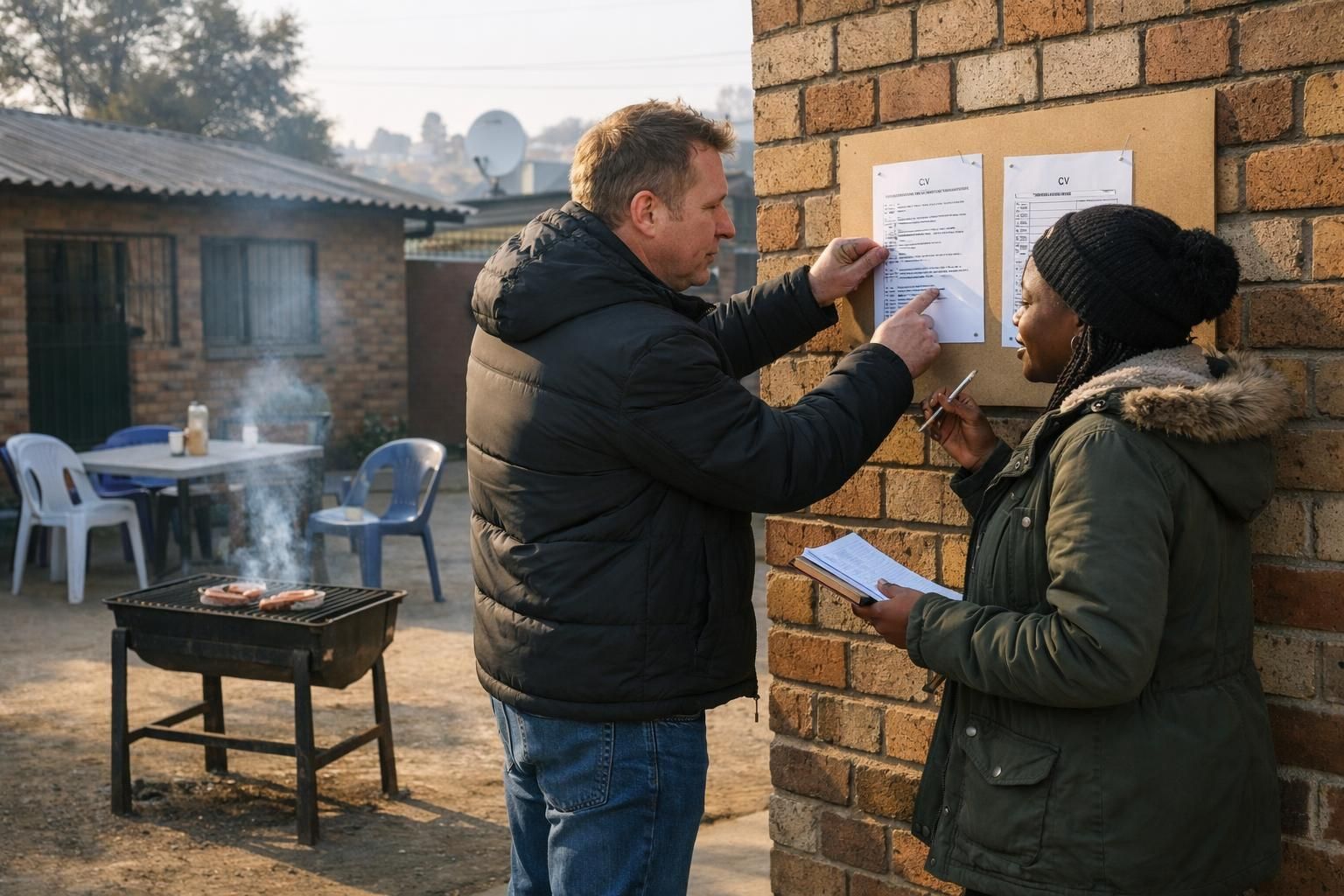
A learnership application letter is a one-page letter that tells the training provider or employer which learnership you want, shows that you meet the requirements, and explains why you will finish the programme. Below you'll find a copy-and-paste template, two complete examples (one for someone with no work experience), and simple tips that work for most fields.
Quick answer:
- Keep it to one page (about 200–350 words), in 3 short paragraphs.
- Name the exact learnership and reference number, and confirm in one sentence that you meet the requirements.
- Give 2–3 short, real examples that show you are reliable and have the basic skills.
- State where you live and when you can start, list your attachments, and make sure everything matches your CV. If the advert asks for a "motivational letter", use the same template with a little more on why you want this field.
What SETAs and host employers look for in a learnership application letter
A SETA (Sector Education and Training Authority) supports training in a specific industry. A host employer is the company where you do the workplace part of the learnership.
They often receive many applications and screen them quickly. Your letter doesn't need big words. It needs to be clear.
When screeners read your letter, they are usually checking:
- The exact learnership you want. The programme name or field, the reference number (if there is one), and the location.
- Eligibility. The minimum education level, age requirements (if the advert states them), South African ID or right to work, and the documents asked for.
- Commitment. Will you attend every day, arrive on time, and do both the classroom learning and the workplace part?
- Relevant basics. Communication, computer skills, maths and numbers, customer service, or practical skills, depending on the learnership.
- A neat, complete application. Your letter matches your CV, and every document they asked for is attached.
In simple terms, a screener reads your first paragraph to answer one question: "Does this person qualify?" If they can't find the answer quickly, they may move on to the next application.
Before you send anything, make sure your CV is up to date and says the same things as your letter. If you don't have a CV yet, you can create a free CV on CV Hub and edit it anytime. For help with what to put on it, see our guide on how to write a CV for a learnership.
How to apply for a learnership (quick checklist before you write)
Do these steps first. They make your letter quicker to write and more specific. For the full process, read our guide to applying for a learnership.
- Confirm the learnership details. Write down the name, field, closing date, location and any reference number.
- List the requirements from the advert, such as education level, subjects, driver's licence or computer skills.
- Gather the documents the advert asks for. Common ones are a certified copy of your ID and of your highest qualification. A certified copy is a photocopy stamped and signed by a commissioner of oaths. See how to get certified copies. Only include what is requested.
- Update your CV to match the words in the advert, without copying it word for word. You can update your CV profile and then choose a CV design when you're ready to download.
- Choose your proof points. Pick 2–3 short examples that show you are reliable or have a relevant skill. They can come from school projects, volunteering, part-time work, a family business or community work.
If you've already built your CV on CV Hub, you can log in to CV Hub and make quick edits before you send your application.
Learnership application letter structure (simple and accepted)
Use this order so your letter is easy to scan:
- Header: your name and contact details, the date, and the organisation's name and town (if you know them).
- Subject line: "Application for [Learnership name] (Ref: …)".
- Paragraph 1: what you're applying for and why you qualify.
- Paragraph 2: your most relevant education or experience, plus 1–2 proof points.
- Paragraph 3: why this field, when you can start, and that you're ready for an interview or assessment.
- Close: a professional sign-off and a list of your attachments.
Keep it to 200–350 words. If it's too long, cut background information. Keep only what proves you meet the requirements.
Copy-and-paste template: learnership application letter
Replace everything in [square brackets] with your own details. Delete any line that doesn't apply to you, such as the reference number if the advert doesn't give one.
[Your Full Name]
[Cell number] | [Email]
[Suburb/Town, Province]
[Date]
[Organisation name]
[HR / Learnership Coordinator]
[City/Town]
Subject: Application for [Learnership name] learnership (Ref: [Reference number])
Dear [Learnership Coordinator / Hiring Manager],
I am applying for the [Learnership name] learnership advertised on [where you saw it]. I meet the minimum requirements, including [highest qualification] and [key requirement from the advert]. I am based in [your area] and can attend training and the workplace placement as required.
I am interested in this learnership because [one sentence about why this field fits your goals]. Through [school / college / work / volunteering], I have developed [2–3 relevant skills]. For example, [short proof point: a project, task or responsibility]. I am also [punctual / a clear communicator / willing to learn], and I am comfortable following instructions, meeting deadlines and working in a team.
I would appreciate the opportunity to be considered for an assessment or interview. I am available from [date] and can be contacted on [Cell number] or [Email]. Thank you for your time and consideration.
Kind regards,
[Your Full Name]
Attachments:
CV
Certified copy of ID
Certified copy of highest qualification
[Any other document the advert requests]
"Key requirement" means something the advert specifically asks for, for example a pass in English and Maths, computer literacy, or a South African ID.
How to use this template well:
- Fill in the first paragraph first. If you can't honestly say you meet the minimum requirements, check the advert again before applying.
- Use your own words in the middle paragraph. Screeners read many letters built from the same template, so your real example is what makes yours stand out.
- Read the finished letter out loud. If a sentence is hard to say, it's probably too long.
Complete learnership application example (you can adapt)
Here is a full, ready-to-send example for a Business Administration learnership. Use it to see how the template looks once it's filled in, then replace the details with your own.
Lerato Mokoena
071 234 5678 | lerato.mokoena@email.com
Mamelodi, Pretoria
13 August 2026
Ikusasa Skills Solutions
Learnership Recruitment Coordinator
Pretoria
Subject: Application for Business Administration learnership (Ref: BA-LS-2026/09)
Dear Learnership Recruitment Coordinator,
I am applying for the Business Administration learnership (Ref: BA-LS-2026/09) advertised on your social media page. I meet the minimum requirements, including a National Senior Certificate and basic computer skills (MS Word and email). I am based in Mamelodi and can travel to Pretoria CBD for training and workplace placement.
I am interested in administration because I enjoy organising information and supporting a team so that work runs smoothly. In 2025, I completed a school-based project where I was responsible for capturing survey responses into a spreadsheet, checking for missing information, and submitting the final file on time. I also assisted at my local church office on weekends, where I answered calls, filed documents, and helped people complete forms. These experiences strengthened my attention to detail, communication skills, and confidence using a computer.
I am dependable and willing to learn, and I understand that a learnership requires consistent attendance, professional behaviour, and meeting deadlines. I would appreciate the opportunity to be considered for an assessment or interview. I can start immediately and can be contacted on 071 234 5678 or lerato.mokoena@email.com.
Kind regards,
Lerato Mokoena
Attachments:
CV
Certified copy of ID
Certified copy of NSC certificate
Why this example works:
- The first paragraph answers "Does she qualify?" straight away.
- The proof points are small but real: a school spreadsheet project and weekend church office work.
- She shows she can get to the training venue, which matters for site-based programmes.
- The attachments list matches what the advert asked for, nothing more.
Motivational letter for a learnership: is it the same thing?
Many adverts ask for a "motivational letter" instead of an "application letter". In practice, they are almost the same document. You can use the template above for both.
The difference is the focus:
- Application letter: mostly about whether you qualify – requirements, documents, availability.
- Motivational letter: still covers that, but gives more space to why you want this field and why you will finish the programme.
So if the advert says "motivational letter", keep the same structure and length, but make your "why" paragraph stronger and more personal. A good "why" links three things: something you have done, something you enjoy, and where you want to go.
Weak "why": "I want this learnership because I need a job and I am passionate."
Strong "why": "I have been fixing extension cords and plugs at home since Grade 10, and I want to turn that interest into a recognised qualification so I can work safely as an electrician."
Here is a full motivational letter example for someone with no formal work experience.
Thabo Nkosi
082 345 6789 | thabo.nkosi@email.com
KwaThema, Springs, Gauteng
2 September 2026
Ubuntu Technical Training
Learnership Coordinator
Springs
Subject: Motivational letter – Electrical learnership (Ref: EL-2026/14)
Dear Learnership Coordinator,
I am applying for the Electrical learnership (Ref: EL-2026/14). I passed matric in 2025 with Mathematics and Physical Sciences, which the advert lists as requirements. I live in KwaThema and can travel to your Springs training centre and to any workplace in the area.
I want to become an electrician because I enjoy understanding how things work and fixing them properly. Since Grade 10, I have helped my uncle with small repairs at home and for neighbours, such as replacing plugs and light fittings under his supervision. This taught me to follow instructions carefully, to switch off and check before touching anything, and to finish a job neatly. At school, I was in the science club, where I helped set up simple circuits for experiments.
I understand that a learnership means classroom training and workplace practice, and I am ready to attend every day and work early shifts when needed. I am not working at the moment, so I can start immediately. I would welcome the chance to attend an assessment or interview, and I can be reached on 082 345 6789.
Thank you for considering my application.
Kind regards,
Thabo Nkosi
Attachments:
CV
Certified copy of ID
Certified copy of matric certificate
Why this works: Thabo has no job history, but every claim has a real example behind it. He also mentions safety and showing up, which matter a lot in technical learnerships. Notice he says he worked "under supervision" – that is honest and avoids sounding like he is claiming to be qualified already.
What to include (and what to leave out)
Include these details
- The exact programme name and reference number (if given).
- Your highest qualification and any relevant subjects or modules.
- Your availability and location, especially if the learnership is site-based.
- 2–3 proof points that show reliability, willingness to learn and basic skills.
- An attachments list that matches what you actually attach.
Leave out these common mistakes
- Long life stories. Stay focused on eligibility and fit. One sentence about your situation is enough if it helps explain your motivation.
- Claims with no example, like "I am the hardest worker".
- Salary demands. Most learnership adverts won't expect this in a first application.
- Every certificate you own. Only include what the advert requests.
- Generic copy-pasted paragraphs that don't mention the actual learnership.
- Begging or desperate language, such as "please help me, I am suffering". Screeners respond better to confidence and clear examples.
Weak vs strong: how to write a proof point
Weak: "I am hardworking, reliable and a fast learner."
Strong: "For two years I helped at my aunt's spaza shop after school, where I counted stock, served customers and handled cash without any shortages."
The strong version gives the screener something they can picture and believe. Every time you write a quality like "reliable", add a short example that shows it.
Avoid this: sending the same letter to every learnership without changing the name and reference number. If a letter mentions the wrong programme or company, screeners may stop reading. Check these details every time you reuse your letter.
What if you have no work experience?
That's normal. Learnerships are often meant for people who are just starting out. You don't need a job history, but you do need examples.
Good places to find proof points:
- School: class projects, being a class rep or prefect, sports teams, good attendance.
- Home and community: helping in a family business, caring for family members, church or youth group duties.
- Volunteering: clean-up campaigns, soup kitchens, helping at events.
- Self-learning: free online courses, teaching yourself Excel, fixing phones or computers for friends.
Write these the same way you would write a job: what you did, and what it shows. For example, "I looked after my two younger brothers every afternoon and made sure they did their homework" shows responsibility and time management.
If you've been at home for a while since school, you don't need to apologise for it. You can say what you did with the time, such as helping at home, studying online or looking for work. For more ideas, see how to write a CV with no experience.
How to tailor your letter to different learnership types
Keep the same structure, but change your proof points and skills to match the field:
- Admin/Finance: accuracy, filing, spreadsheets, handling documents, basic maths.
- Customer service/Contact centre: clear communication, patience, problem-solving, handling complaints calmly.
- IT/Digital: basic troubleshooting, learning on your own (online practice), building a simple project. Even a small spreadsheet system counts.
- Technical/Trades: safety awareness, practical projects, willingness to work shifts or on site, teamwork.
- Health/Social services: keeping information private (confidentiality), empathy, community volunteering, following procedures.
A quick way to tailor: underline the skills in the advert, then make sure at least two of them appear in your letter with an example. If your CV is still very general, adjust it first so it supports the same message as your letter. To see how other candidates present their profiles, you can browse the CV database for layout and section ideas.
Subject lines and email message (if you're applying by email)
If you're emailing your application, your subject line helps the recruiter find and sort it. Use one of these:
- Application: [Learnership name] (Ref: …) – [Your Name]
- [Learnership name] Learnership Application – [Your Name]
Keep the email short: 2–4 lines that introduce your attachments. Attach the letter as a separate document. Don't write a completely different message from your letter.
Subject: Application: Business Administration Learnership (Ref: BA-LS-2026/09) – Lerato Mokoena
Dear Learnership Coordinator,
Please find attached my learnership application letter, CV and supporting documents for the Business Administration learnership (Ref: BA-LS-2026/09). I would appreciate the opportunity to be considered.
Kind regards,
Lerato Mokoena
071 234 5678
Use a professional email address, ideally your name (for example lerato.mokoena@…). Nicknames can look unprofessional to a screener. For more on attachments and file sizes, read how to email your CV.
Final checks before you submit
- Name your files clearly, for example "LeratoMokoena_CV.pdf" and "LeratoMokoena_ID.pdf".
- Make dates and details match between your CV and letter (schools, years, qualifications).
- Check the spelling of the learnership name and reference number.
- Confirm the attachments are actually attached and easy to read, especially scanned or photographed documents.
- Check the closing date and send well before it, in case of network or upload problems.
- Keep a copy of what you sent and write down the date.
Tip: save each application in a folder named after the learnership and closing date. If you're called for an assessment, you can quickly re-read exactly what you sent. If you hear nothing, see our guide on how to follow up on an application.
If you need help with platform steps (downloads, edits, designs), read the CV Hub FAQ. If something isn't working or you're unsure what to upload, contact CV Hub.
If you're also writing a cover letter for a job (not a learnership)
A learnership letter is usually shorter and more focused on eligibility than a normal job application. If you're also applying for regular jobs, use this guide: Motivational letter for job application: template + example (South Africa).
Applying for an internship instead? See our internship application letter template.
One-page summary you can follow every time
- Mention the exact learnership and reference number.
- Confirm you qualify in one sentence (qualification plus key requirement).
- Add 2 proof points that show reliability and a basic relevant skill.
- Explain in one or two sentences why you want this field.
- State your location and when you can start.
- List your attachments and keep everything consistent with your CV.
Frequently asked questions
What is a learnership application letter?
It is a short, one-page letter you send with your CV when applying for a learnership. It names the programme, shows you meet the requirements, and explains why you will complete the training. Think of it as the introduction that makes the screener want to open your CV.
Is a motivational letter for a learnership the same as an application letter?
They are very similar, and you can use the same template for both. A motivational letter puts a bit more focus on why you want this field and why you will finish the programme. Keep it to one page either way.
How long should a learnership application letter be?
Aim for about 200–350 words on one page, split into 3 short paragraphs. Screeners read many applications quickly, so a short, clear letter is easier to read than a long one. If yours is longer, cut background information and keep only what proves you qualify.
Where can I get a learnership application letter template?
You can copy the template on this page and fill in the parts in [square brackets]. Change the learnership name, reference number and your examples every time you apply. Don't send the template as-is – the personal examples are what make it work.
Can I apply for a learnership with no experience?
Yes. Many learnerships are meant for people who are just starting out. Use examples from school, volunteering, helping at home or a family business, or self-study to show you are reliable and willing to learn.
Should my learnership letter be typed or handwritten?
Type it unless the advert specifically asks for a handwritten letter. A typed letter is easier to read and easier to send by email or upload online. Save it as a PDF so the layout doesn't change on the recruiter's side.
Once your letter is ready, make sure your CV looks professional and easy to read. You can create a free CV in minutes and adjust it for each learnership application.